Zomato Restaurant Analysis
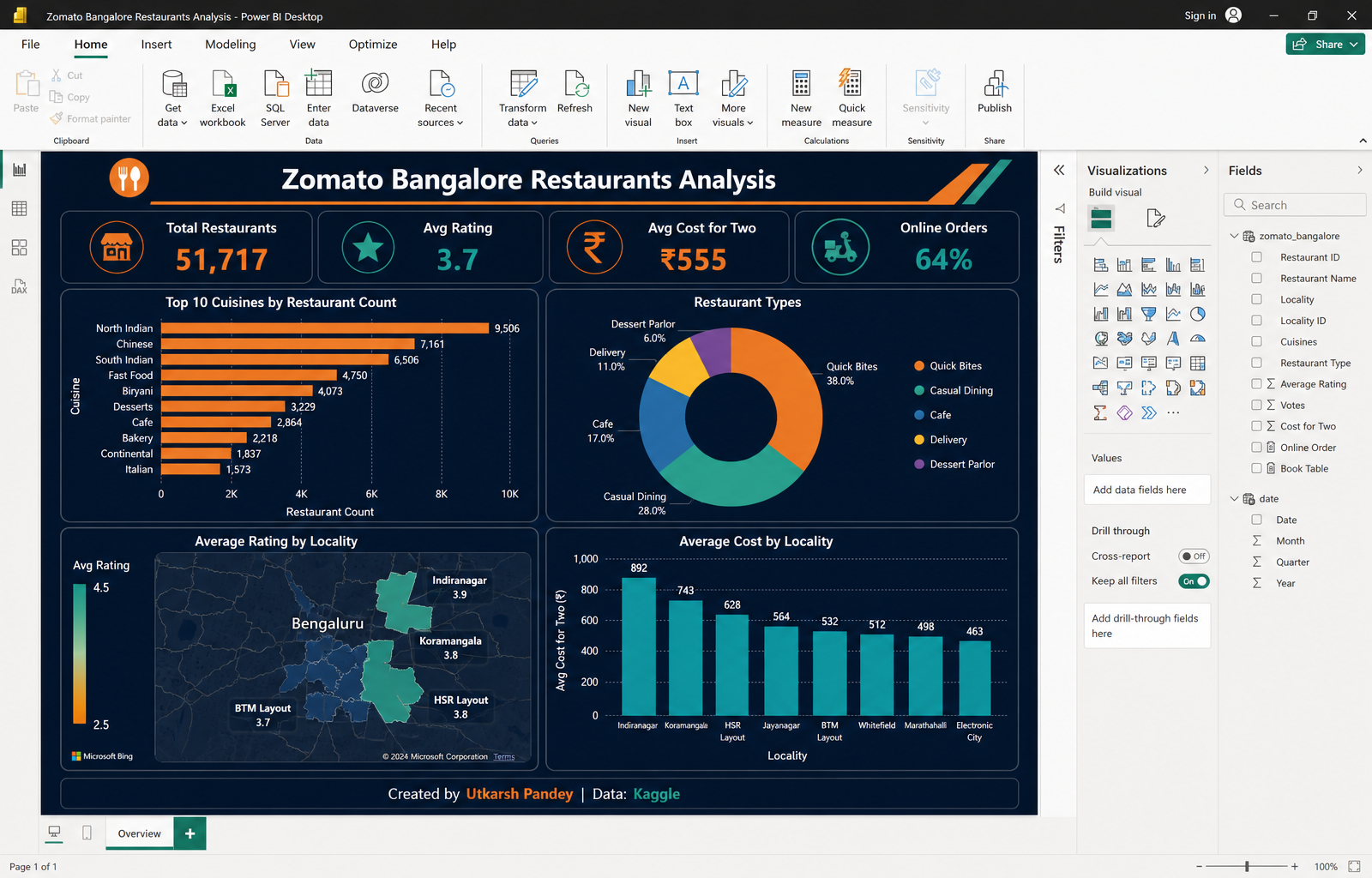
A comprehensive analysis of 5,000+ Bangalore restaurant records using Power BI to identify market gaps and recommend a data-backed cloud-kitchen entry strategy.
5,000+
BTM Layout / HSR
3.7-star avg
Rs 463
Objective
The goal was to analyze Zomato's Bangalore restaurant dataset to uncover actionable insights for a new cloud-kitchen venture. By examining cuisine distribution, pricing patterns, customer ratings, and geographic density, I aimed to identify a high-opportunity location with manageable competition.
Methodology
- Cleaned and pre-processed 5,000+ restaurant records using Python (Pandas)
- Built interactive Power BI dashboard with cross-chart filtering and geographic heat maps
- Applied DAX measures for dynamic KPIs and segmentation analysis
- Segmented locations by rating, cost, and cuisine density to find market gaps
Key Findings
High-Opportunity Segment
Identified a sweet spot with Rs 463 average cost and 3.7-star quality rating — underserved by premium competitors but above budget-tier expectations.
Location Insight
BTM Layout and HSR showed lower restaurant density relative to population, suggesting room for a new cloud-kitchen entry without direct saturation.
Cuisine Gap
North Indian and Chinese cuisines dominated, while continental and healthy food segments showed growth potential with fewer players.
Rating Pattern
Top-rated clusters correlated with mid-range pricing (Rs 400–600), not premium tiers — validating the chosen target segment.
Business Recommendation
Cloud-Kitchen Entry Strategy
Launch a mid-range cloud kitchen in the BTM Layout/HSR corridor targeting the Rs 400–600 price band with a 3.5+ star quality commitment. Focus on underrepresented cuisines (continental/healthy) while maintaining North Indian staples for volume. The data shows this segment has demand but fewer direct competitors compared to saturated premium zones.